
Wisewand Persona Setup: Get the Tone Right Every Time
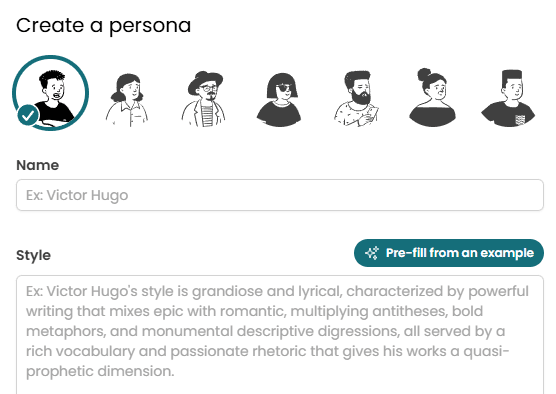
Why Personas Are the Most Important Wisewand Feature
After generating over 80 articles with Wisewand across multiple sites, I can say this with certainty: your persona configuration determines at least 80% of your content quality. Everything else - keyword selection, mode choice, article length - comes second.
Franck, one of Wisewand's co-founders, put it best during an early demo: "A persona is the DNA of your content. It's what allows your content to look like you, and that's the most important thing." Having tested extensively with both well-configured and generic personas, I couldn't agree more. The difference in output quality is dramatic.
Yet based on what I've seen in community discussions and support channels, persona configuration is the most misunderstood feature. Many users skip it entirely or fill it out with one-line descriptions. This guide will fix that.
This guide is part of our comprehensive Wisewand review - read it first for the full picture of what Wisewand AI can do.
What Exactly Is a Wisewand Persona?
A persona in Wisewand defines your brand voice - the tone, style, vocabulary, expertise level, and writing patterns the AI uses when generating content. Think of it as a detailed briefing you'd give to a freelance writer before they start working for you.
The Three Core Fields
Every persona has three essential configuration areas:
- Tone: This sets the overall voice. Options range from conversational and friendly to formal and academic. For blog content, conversational typically performs best. For affiliation and product reviews, a more professional-yet-approachable tone tends to convert better
- Content Type: This tells Wisewand what kind of content you primarily create. It affects structure, vocabulary choices, and how the AI approaches topics. Blog articles, affiliate reviews, e-commerce descriptions, and news content each require different approaches
- Supplementary Information: This is where the magic happens. Here you describe your expertise, years of experience, writing philosophy, preferred vocabulary, things you always include, things you never do. The more specific you are, the better the output
Why Generic Personas Produce Generic Content
If your persona says "I write about technology" and nothing else, Wisewand has almost nothing to differentiate your content from what any other AI tool would produce. The supplementary information field is what transforms generic AI output into content that sounds like a real person with real expertise wrote it.
Method 1: Auto-Analysis (Fastest Setup)
Wisewand offers an auto-analysis feature that I recommend for anyone who already has published content they're happy with.
How It Works
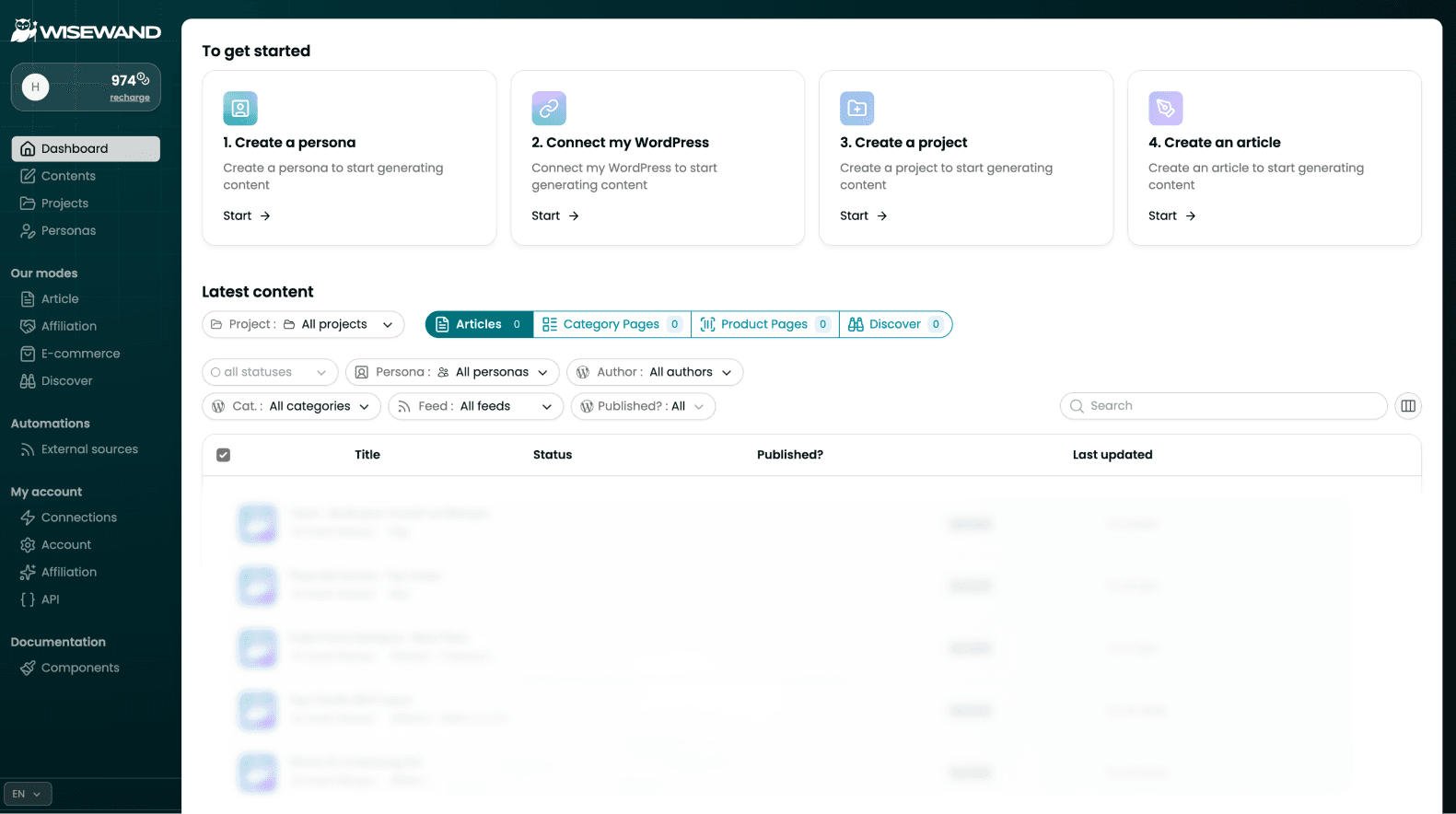
- Navigate to the Personas section in your Wisewand dashboard
- Select "Create New Persona"
- Choose the auto-analysis option
- Paste an existing article URL - or copy-paste the text directly from one of your best-performing articles
- Wisewand analyzes the writing style, tone, vocabulary patterns, and content structure
- It generates a complete persona profile and shows you a sample to confirm
Pro Tips for Auto-Analysis
- Use your 3 best-performing articles: Don't just pick any article. Choose the ones that rank well and generate engagement. These articles already contain patterns that work with your audience and with Google
- Verify the generated description: After analysis, Wisewand will describe your tone (e.g., "informational, engaging, tending toward familiar"). Read this carefully and adjust if it doesn't match your intent
- Test with a sample generation: Before using the persona on real articles, generate a test article and compare it to your existing content. Does it sound like you? If not, refine the supplementary information
Paul Vengeons, a well-known SEO consultant who reviewed Wisewand, demonstrated this exact workflow in his tutorial. He copy-pasted text from a site he wanted to emulate, and the tool accurately described the tone as "informational, engaging, tending toward familiar." The resulting content matched the source style remarkably well.
Want to try this yourself? Try Wisewand today →
Method 2: Manual Configuration (Maximum Control)
If you're starting a new site or want complete control over your brand voice, manual configuration is the way to go.
Step-by-Step Manual Setup
1. Define Your Tone
Choose one primary tone and one secondary modifier:
| Primary Tone | Best For | Example |
|---|---|---|
| Conversational | Blog articles, tutorials | "Let me show you how this works..." |
| Professional | B2B content, SaaS reviews | "This solution addresses key enterprise needs..." |
| Expert/Technical | Niche authority sites | "Based on load testing at 10,000 concurrent users..." |
| Friendly/Casual | Lifestyle, consumer products | "I've been using this for 3 months and honestly..." |
| Journalistic | News, current events | "Sources confirm that the latest update includes..." |
2. Set Your Content Type
This determines the structural patterns Wisewand uses. Select the primary type that matches your site:
- Blog articles: Longer-form, educational content with how-to structures
- Affiliate reviews: Product-focused content with comparison tables and CTAs
- E-commerce: Product descriptions with specifications and buying guides
- News/Actualité: Time-sensitive content that integrates current information from Google News
3. Write Detailed Supplementary Information
This is the field most users underutilize. Here's what to include:
- Your expertise: "I have 8 years of experience in digital marketing, specializing in SEO and content strategy for SaaS companies"
- Your approach: "I always back claims with data. I never make recommendations without testing a product for at least 2 weeks"
- Your vocabulary preferences: "I use technical terms but always explain them. I avoid jargon for jargon's sake"
- Your formatting habits: "I use comparison tables in every review. I always include a 'Quick Verdict' section at the top"
- What you never do: "I never use hyperbolic language like 'revolutionary' or 'game-changing.' I don't make promises about specific ranking results"
Advanced Persona Strategies
One Persona Per Site (Not Per Topic)
In my testing, creating one well-crafted persona per site produces the most consistent results. If you run a tech review site, your persona should reflect the site's overall voice, not change per article topic. Consistency is what builds brand recognition.
The exception is if you run fundamentally different types of sites. Your affiliate review site and your informational blog probably need different personas. But within a single site, stick to one.
The "Hack" Approach for Niche Content
The Wisewand co-founders shared a powerful technique in one of their advanced tutorials: combining persona settings with the supplementary instructions field in Advanced mode for ultra-specific content.
For example, if you're creating local SEO content, your persona might define your general expertise, while the supplementary instructions for each article add local references - specific neighborhoods, local landmarks, regional terminology. This layered approach produces content that feels genuinely local rather than generically optimized.
Users have reported using this technique for everything from recipe sites ("write as a chef with 20 years of experience in French cuisine") to plumbing services ("use technical plumbing vocabulary but explain terms for homeowners") to local businesses ("reference specific streets, neighborhoods, and landmarks in Lyon").
Persona for Affiliate Content
For affiliate sites specifically, I've found that the persona should lean professional but approachable. You want to convey:
- Genuine testing experience with the products
- Objectivity - mention downsides, not just positives
- Specific numbers and data points
- A clear recommendation framework ("Best for X", "Best for Y")
Franck from the Wisewand team recommends a professional tone for affiliation content and a conversational tone for blog content. To see how personas work in practice with affiliate articles, read our Wisewand Affiliation Mode guide. In my testing, this distinction consistently produced better results.
Common Persona Mistakes (and How to Fix Them)
Mistake 1: The One-Liner Persona
Bad: "I write about technology."
Better: "I'm a technology journalist with 12 years of experience covering SaaS tools, web development, and digital marketing. I test every tool for at least 2 weeks before reviewing it. My readers are marketing professionals and small business owners who want practical advice, not hype. I use data and screenshots to support every claim. I prefer a direct, no-nonsense writing style but keep things accessible - no unnecessary jargon."
Mistake 2: Copying Someone Else's Persona
Your persona should reflect your actual brand voice, not someone else's. If you auto-analyze a competitor's content and use that persona, your output will sound like them - which defeats the purpose. Use auto-analysis on your own content, or build a persona that represents the voice you want to develop.
Mistake 3: Never Updating the Persona
Your writing style evolves. Revisit your persona every 3-6 months. If you've refined your content approach, your persona should reflect those changes.
Mistake 4: Ignoring the Test Step
Always generate a test article after creating or modifying a persona. Compare it against your existing content. If it doesn't sound right, adjust the supplementary information. This 10-minute investment saves hours of editing later. Have more questions about setup? Browse our Wisewand FAQ for quick answers.
Ready to produce SEO content that ranks? Start writing with Wisewand →
Persona Impact on SEO Score
In my testing, articles generated with a well-configured persona consistently scored 10-15 points higher on Wisewand's SEO score than articles generated with a minimal persona. The reason is straightforward: a detailed persona produces more specific, authoritative content with natural vocabulary variation. If you want to see how persona quality affects Autopilot output, follow our step-by-step Autopilot guide. This is exactly what Google's helpful content guidelines reward.
One reviewer achieved an SEO score of 90/100 during a live demo - a score that's difficult to reach with generic AI content. The persona he used included detailed expertise, specific formatting preferences, and clear tone guidelines.
Persona Templates You Can Adapt
Template: Tech Review Blogger
Tone: Expert but accessible. Content Type: Blog. Supplementary: "I'm a tech enthusiast who has been reviewing software tools since 2015. I test every tool for at least 2 weeks with real projects before writing about it. I always include pricing breakdowns, comparison tables, and real screenshots. My readers are small business owners and freelancers who want honest, practical assessments. I mention both strengths and weaknesses. I avoid marketing buzzwords."
Template: Affiliate Product Reviewer
Tone: Professional and conversational. Content Type: Affiliation. Supplementary: "I'm an independent product reviewer specializing in [your niche]. I purchase and test every product I review, typically for 30+ days. I include specific measurements, real-world test results, and comparison data. I always declare a clear winner in comparisons and explain my reasoning. I use structured formats: quick verdict, detailed review, pros/cons, FAQ."
Template: E-commerce Product Writer
Tone: Informative and persuasive. Content Type: E-commerce. Supplementary: "I write product descriptions that balance SEO optimization with conversion. I highlight key specifications, use cases, and customer benefits. I always include sizing/compatibility information where relevant. I write for customers at the decision stage who need the final push to buy, while also covering informational queries for top-of-funnel discovery."
Measuring Persona Effectiveness
How do you know if your persona is working? Track these metrics:
- Wisewand SEO Score: Aim for 75+ consistently. If you're below 70 with a persona, the supplementary information needs more detail
- Edit time per article: A good persona should reduce your editing time to 20-30 minutes. If you're spending an hour rewriting tone and style, the persona needs adjustment
- Content consistency: Read 5 articles generated with the same persona side by side. They should sound like the same author wrote them. If the voice shifts dramatically between articles, add more specific guidelines to the supplementary information
- Reader engagement: Track bounce rate and time on page. Persona-optimized content should keep readers engaged longer than generic AI output
For a deep dive into how these personas affect the content Wisewand produces, see our Wisewand vs ChatGPT comparison - the difference in output quality with personas is one of Wisewand’s biggest advantages over generic AI.
See these features in action: See current Wisewand pricing →
Final Thoughts
Your Wisewand persona is not a "set it and forget it" field. It's the foundation that every article builds on. Spend 30 minutes configuring it properly, test it, refine it, and you'll save hours of editing across every article you generate.
The difference between a well-configured persona and a generic one is the difference between content that sounds like it was written by an AI and content that sounds like it was written by an expert who happens to use AI as a productivity tool. In my experience, that distinction is what separates content that ranks from content that doesn't.
If you want to test how personas transform your content quality, Wisewand offers credit packs that never expire - so you can experiment at your own pace. Check out all available plans here and start with a persona that truly represents your brand. You can also grab our exclusive Wisewand promo code to save on your first plan. Want to see how Wisewand stacks up against the competition? Check our alternatives comparison.

Arnaud
SEO publisher and tool tester since 2020. I test AI SEO writing tools hands-on - generating real articles, tracking rankings, and measuring ROI - so you don't have to gamble your budget.